
A tale of two cities on handling counter petitions
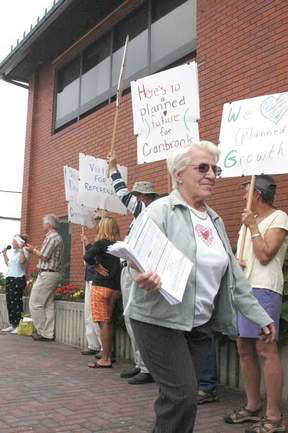
Citizens for a Livable Cranbrook delivered more than 3,000 signatures on a counter petition in 2009. (Cranbrook Daily Townsman photo)
City council must be feeling some nerves as the Lorne Street parkade counter petition passes the halfway mark toward the 6,500 signatures it needs.
Maybe jitters contributed to dismissal of a request from the Friends of Riverside Park on Tuesday to clarify the way in which the counter petition is identified on the City’s website.
For the life of me, I can’t see why it couldn’t be done, but Mayor Peter Milobar stubbornly insisted only the legal wording for the petition must appear on the site.
Technically, it’s an “alternative approval process” and that’s what it’s called on the website, with no reference to counter petition.
What would be tough about adding the words “also known as a counter petition” after “alternative approval process?”
Likewise, council earlier turned down a request to make “elector response forms” available in other civic buildings as well as City Hall.
Shouldn’t mayor and council want to make the democratic process — of which counter petitions are definitely part — as easy and as accessible as possible?
So what if the petitioners are a pain in the ass who want to overturn a City Hall decision. Whether the petition is won or lost, is it not better that everyone be absolutely satisfied it was handled in an unbiased manner?
As it is, council has generated, of its own doing, a growing opposition coalition that now includes the Friends of Riverside Park, Kamloops Voters Association, and Council of Canadians leaping into the void.
Last year, the City of Victoria was faced with a challenge to its plan to replace the old Johnson Street Bridge. On its website, it clearly explained the alternative approval process, which it stated was “also known as a Counter Petition….”
It published newspaper ads further explaining who was eligible and how to go about signing up if a voter wished.
Not all of Victoria council was accommodating — one councilor groused that the counter petition was “a waste of time,” ignoring the fact provincial legislation gives people the right to use it.
By the way, the population of Victoria is similar to Kamloops, shy of our own numbers by a few thousand. The petition against the bridge project needed 6,343 signatures, almost the same number as the anti-parkade petition needs. It got 11,736, of which 1,864 were invalid, leaving 9,872.
Faced with a choice of dropping the project or going to a referendum, Victoria council forged ahead and managed to talk voters into borrowing $50 million towards a new bridge. Sixteen thousand voters turned out, approving it by 60 per cent to 40.
Two years ago, Cranbrook City council decided to expand municipal boundaries. A counter petition that needed 1,475 names to pass the 10-percent threshold got twice that, 3,024.
A subsequent referendum for the boundary extension was defeated by a mere 35 votes with a turnout of 5,000.
Another mystery in this whole controversy is why, knowing that there was significant public division over the parkade, our own council didn’t go straight to a referendum in connection with the municipal November election. Now, if the counter petition succeeds, an expensive stand-alone referendum will be needed should council decide to push ahead.
Tonight’s debate between Denis Walsh and Tina Lange at Desert Gardens should be a good one.

 ArmchairMayor.ca
Leave a comment