
Rehabilitating Klatsassin through art and myth
Review for The Kamloops Daily News, Friday, June 11, 2010
Stan Douglas recalls that, when he released his exhibit Klatsassin, he wasn’t a popular man among the Chilcotin people, who were suspicious of his intent. Later, he said, they seemed alright with it.
Little wonder. Once they got a look, they probably walked away shaking their heads. I suspect Douglas wants everybody to do that.
Four years later, his photos-and-film exhibit has made its way to Kamloops, opening this week at the art gallery. Anybody who would produce a 69-hour movie very likely doesn’t want us to “get it.”
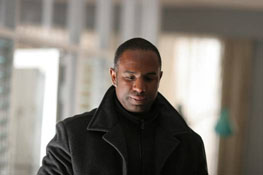
Stan Douglas.
Who, after all, would waste that much time trying to figure out what goes on inside an artist’s head, though one reviewer professes to know, concluding that “. . . for all its technical sophistication and labyrinthine complexity, Klatsassin exploits a relatively simple binary opposition: a poetic tension between the repetitive precision of cinematic time and the fluidity of subjective experience.”
Excuse me?
I’m with the Chilcotin — I don’t get it either. Just as well, perhaps.
Chilcotin leaders are very protective of anything to do with Klatsassin, or Klatassine, a war chief who led a band of thugs on a rampage of murder and plunder in 1864, and was hunted down and hanged.
They worry that any new history or treatment will challenge the myth of the convenient hero figure who supposedly tried to protect his people’s land against invasion.
What actually happened was that Klatsassin/Klatassine talked a group of Chilcotins into hacking a white roadbuilding crew to death as they slept so they could steal their stuff. They committed several other murders along the way, including that of my great-great-grandfather, whom they shot in the back.
At the time, it was known as the Bute Inlet Massacre (a more apt description) but let’s stick with The Chilcotin War, which is what I used as the title of a book I wrote about it back in 1978.
Not until after he murdered his first unarmed white man did Klatassine start talking about territory and war (murder is such a nasty word, war is so much better). As many criminals do, he was smart enough to try to justify his actions with spin.
And, by the way, neither Alexis, the much respected chief of all the Chilcotin, nor the less admirable Chief Anahim, backed Klatassine — indeed, they co-operated with the colonial expedition that caught him.
The art gallery, in its promotional material, claims Douglas “defies the official version of events.” Translation: let’s not be overly concerned with the facts.
This “war,” far from being a “little-known event in B.C.’s history” as some artistic types like to claim, is one of the most highly documented episodes of that time. Official reports, journals, contemporary interviews, ledgers, testimony and, of course, newspaper stories abound, providing a pretty clear picture of what took place.
Despite this, the romanticization of Klatassine has been so successful that, in 1999, the provincial government officially apologized for hanging him and his fellow cutthroats. It’s curious to me that non-native society feels compelled to apologize not only for the many wrongs done to our First Nations peoples but also for an event in which innocent Europeans were slaughtered.
I can empathize with Douglas in one sense — when I published The Chilcotin War, I wasn’t exactly Mr. Popular with the Chilcotin folks, either. What they have difficulty understanding is that Klatassine’s depredations against whites make him as much the historic property of non-natives as of the Chilcotin.
If Douglas provides enough incentive to learn more about the Chilcotin War, he’ll have done a service. So when you give up trying to figure out what Douglas is talking about, pick up a copy of Rich Mole’s recent book and find something out about what really took place.
I was prepared not to like this book (it’s published by Heritage House and sells for $9.95) because, for one thing, Mole uses the same title I did, albeit with subtext “A Tale of Death and Reprisal.”
I was pleasantly surprised to find myself enjoying it. This is a thin volume at just 140 pages, but it lays out the core facts of the situation very well and actually adds a lot of good stuff about the key players. I found myself learning new things from it, and, to me, that’s what makes a revisit of a by-now well-mined event valuable.
He accurately portrays colonial society and the project led by entrepreneur Alfred Waddington to build a new route to the Barkerville goldfields up Bute Inlet and across the Chilcotin Plateau.
Mole points out that, far from objecting to the presence of whites in their territory, the Chilcotin were generally accepting of the traders who took up residence there, and were even employed by Waddington’s road crew.
While much is made of alleged trickery in getting Klatassine to surrender to expedition leader William George Cox, Mole explains that as winter approached Klatassine and his band on the run were facing starvation and had no choice.
Further evidence of the inability of normal people to fathom Douglas’ message is the fact that reviews of his work all seem to borrow from each other for convenience, echoing near-identical lines about “recombinance” and comparisons to Akira Kurosawa’s 1950 film Rashomon. It’s all so artsy-fartsy.
Looking at Douglas’ version of the Klatassine story is a little like staring at a painting of a stripe and trying to fathom its deep inner meaning. Reading Mole’s book is like looking at a painting of a stripe and saying, “Yup, that’s a stripe.”
Take your pick.
mrothenburger@kamloopsnews.ca

 ArmchairMayor.ca
The duration of the film is central to Douglas’ methodology, which seeks to criticize the unidirectional and (oftentimes) Euro-centric, grand historical narratives promoted by historians such as yourself. But I don’t believe that Douglas is simply trying to complicate the details of this particular event, nor is he merely reflecting the opposition between the white settlers and the Chilcotin natives. I think what’s central to the narrative and conceptual basis of this work is that the historical “facts” that make up this event are largely based on narrative and first-person recollection, which changes over time.
I’m puzzled as to how anyone living in the 21st century can still argue that “Official reports, journals, contemporary interviews, ledgers, testimony and newspaper stories” reflect nothing less than the moral perspective of those in charge of it’s broadcast – especially at a time when such technologies where limited to settlers and colonialists. I’m sure of the Chilcotin had access to a printing-press and railroads, we’d have a very different “official” record of what happened that day.
Regarding art history, are you more in favor of artist who portray historical events as a tightly packaged stories, or should artists not even bother with such issues and stick to finger-painting? Either way, we’re talking about undoing a few hundred years of history and limiting the role of art to something more akin to propaganda.
LikeLike
On the other hand, I’ve always been puzzled how people living 150 years after an event think they can reach back in time and discover the “real” reasons something happened. They seem to figure that if the record shows one thing, well, the “true” story must be the opposite.
LikeLike
Funny how you base your entire argument on the one flimsy assumption that the Chilcotin people walked away scratching their heads upon viewing the piece. Why not try and reach out to them and get their take on it?
LikeLike
Actually, the flimsy assumption that the Chilcotin people walked away scratching their heads was incidental to my argument. It was simply used to illustrate the fact that most people don’t have the means or inclination to watch a 69-hour movie. The concern of the current Chilcotin chiefs on the Klatassine issue is well-known. I once reached out to get their take on it at a large gathering at UBC called to debate the Chilcotin War, and they expressed their unhappiness with my views at that time.
LikeLike